
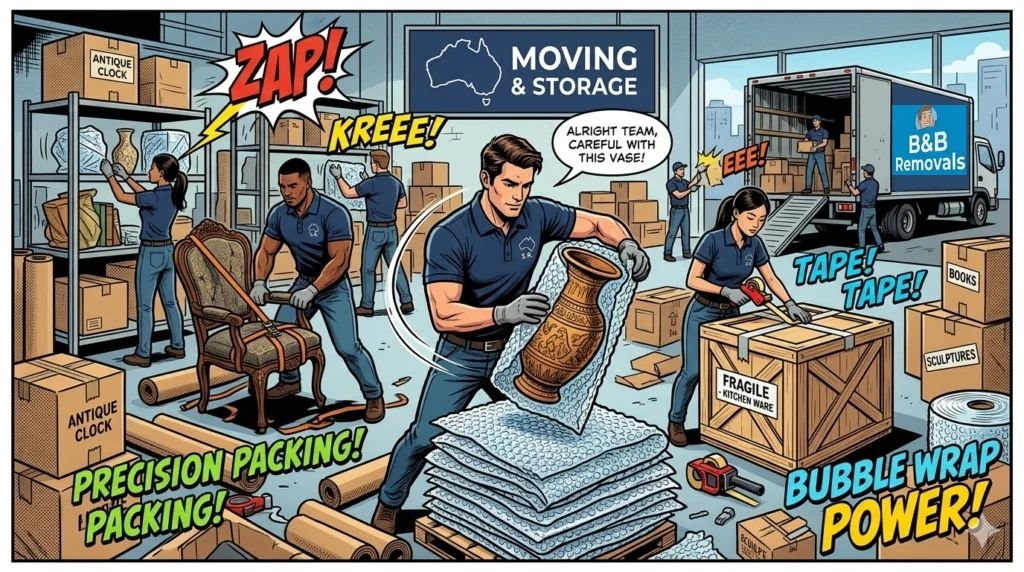
Professional Sydney packers use expert techniques, quality materials, and strategic packing methods to protect fragile items during relocation, ensuring valuables remain secure and undamaged throughout the moving process.
There’s a specific kind of dread that hits the night before a move. You’ve sorted the lease, booked the truck, taken the day off work and then you walk past the china cabinet and realise you have absolutely no idea how to get its contents safely into a cardboard box.
Sydney removalists deal with this moment every single day. And the good ones don’t just show up with bubble wrap and hope for the best. They follow a system. Here’s what that system actually looks like.
They Start With a Walk-Through, Not a Box
Before a single item gets wrapped, a professional team walks through your home. They’re identifying what’s genuinely fragile, what needs custom treatment, and what can’t be replaced by an insurance payout. This assessment shapes how many boxes they’ll need, which materials get used where, and how the truck gets loaded at the end.
It’s the step most DIY packers skip entirely. It’s also the reason professionals break far fewer things.
The Right Materials for the Right Item
Supermarket boxes are genuinely dangerous for a move. Single-wall cardboard compresses under weight and buckles at corners. Professional removalists bring their own supplies: double-walled moving boxes, bubble wrap, unprinted packing paper (newspaper ink stains), foam sheets, stretch film, and heavy-duty furniture blankets.
The skill isn’t just having good materials. It’s knowing which material belongs with which item. You wouldn’t wrap a crystal vase the same way you’d wrap a pasta bowl. Professionals make those calls hundreds of times per job without thinking twice.
The Kitchen: Where Most Things Break
Every Sydney removalist will tell you the kitchen is the room that causes the most heartbreak on moving day. And it’s almost always because of one of two mistakes: glasses packed sideways, or plates stacked flat.
Professionals wrap every glass individually, cushioning stems separately from the bowl since that’s the weakest point. Plates stand on their edges, not flat; this single change dramatically reduces cracking. Every box gets a cushioned base first, heavy items go in before light ones, and every gap gets filled before the lid is sealed.
Which brings us to the actual trade secret.
The Real Secret: Immobilisation
Items don’t usually shatter from one dramatic impact. They crack from repeated small movements every vibration, every corner, every bump transferring force over and over during transit.
So the real goal of professional packing is simple: nothing moves inside the box. Every void gets filled with crumpled paper or foam until the contents are completely immobilised. Before sealing, a good removalist gives the box a gentle shake. If anything shifts, more padding goes in. The test gets repeated until nothing moves at all.
It adds a few minutes per box. It saves thousands in replacements.
Artwork, Mirrors and Electronics
Frames get masking tape across the glass in a cross pattern before anything else not to prevent breakage, but to contain it if it happens. Foam corner protectors go on next, then bubble wrap, then a purpose-built picture carton. Everything travels upright. Always upright.
For electronics, packers choose the original packaging which is always the best option if you’ve kept it. When that’s not available, TV screens get wrapped in soft foam before bubble wrap and packed upright in reinforced boxes. Cables are coiled and labelled. Batteries come out. Anti-static bubble wrap (the pink kind) goes on anything with sensitive internal components standard bubble wrap generates static that damages electronics.
Labelling Makes the Unpack Possible
Every fragile box gets marked on all sides, not just the top because in a stacked truck or hallway, you can only see the sides. “Fragile” and an arrow showing which way is up go on every face. A good packing and unpacking service in Sydney carries this label through to the unpack, working room by room so you’re not searching through twenty boxes at 9pm looking for the kettle.
Is It Worth Hiring a Professional?
The honest answer is: run the numbers.
A broken flat-screen TV in Sydney costs $800 to $2,500 to replace. A set of inherited china has no price at all. A professional packing and unpacking service in Sydney starts from around $150 for fragile-only work and up to $900 for a full home pack. Against the cost of damaged goods and the hours of your own time it starts looking like a very reasonable investment.
The professionals earn their fee because they’ve seen what happens when it goes wrong. Their entire method exists to make sure it doesn’t.
Those things you’re worried about breaking? They’re worried about them too. That’s the whole point.
Key Takeaways From Professional Packing
- Sydney packers begin with a walkthrough to identify fragile and high-value items.
- Professional materials like double-walled boxes and bubble wrap ensure better protection.
- Kitchenware, glassware, and plates are packed using specific techniques to prevent breakage.
- Items are immobilised inside boxes to stop movement during transport.
- Clear labelling and organised packing make unpacking faster and safer.
Recent Posts
- Moving House on Settlement Day in Sydney: What Should You Plan For?
- Why Are Removalist Quotes in Sydney So Different?
- 15 Packing Mistakes That Damage Furniture During a Move
- How Much Does It Cost to Hire Removalists in Sydney? A Simple Guide to Understanding Moving Costs
- 12 Signs a Move Is Going to Be Easy Before We Lift the First Box