
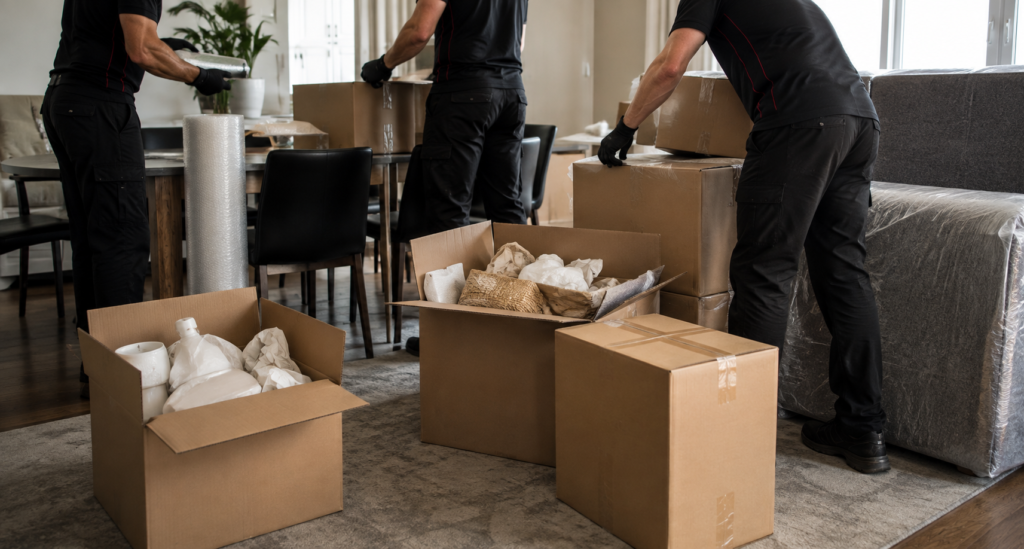
Common packing mistakes can lead to scratched, cracked, or damaged furniture during a move. Learn practical packing techniques used by experienced packers in Sydney to protect your belongings and make your move safer and more organised.
Moving to a new home is exciting, but packing furniture the wrong way can lead to scratches, dents, broken glass, or even cracked timber. After completing hundreds of house moves, our team has noticed something interesting. Most furniture damage does not happen while carrying items to the truck. It often starts much earlier during packing.
One move in Sydney is a great example. A family had packed everything themselves over several weeks. The boxes looked neat, and the furniture was ready near the front door. They were confident the hard work was done.
As we began loading, we noticed a few small packing mistakes. A glass shelf had no corner protection. A dining table still had loose legs attached. A wardrobe drawer was full of books. None of these looked like big problems, but together they could easily have caused damage during the trip.
Fortunately, we had time to fix everything before the truck left.
Here are 15 packing mistakes we see most often and how you can avoid them.
Packing Mistakes to Avoid Before a Move
1. Wrapping Furniture Too Late
Many people wait until moving day to wrap their furniture. This creates pressure and often leads to rushed packing.
Whenever possible, wrap large furniture the day before. This gives you enough time to protect every surface properly without feeling rushed.
2. Leaving Drawers Full
It may seem easier to leave clothes or books inside drawers, but this makes furniture much heavier.
Heavy drawers place extra stress on the furniture frame and make lifting more difficult. Emptying drawers before moving helps protect both the furniture and the people carrying it.
3. Forgetting to Remove Shelves
During one move, a bookshelf tipped slightly while being carried. Luckily, the removable shelf had already been taken out.
Loose shelves can slide, fall, and damage both the furniture and nearby items. Remove them whenever possible and pack them separately.
4. Not Taking Furniture Apart
Some furniture is designed to come apart easily.
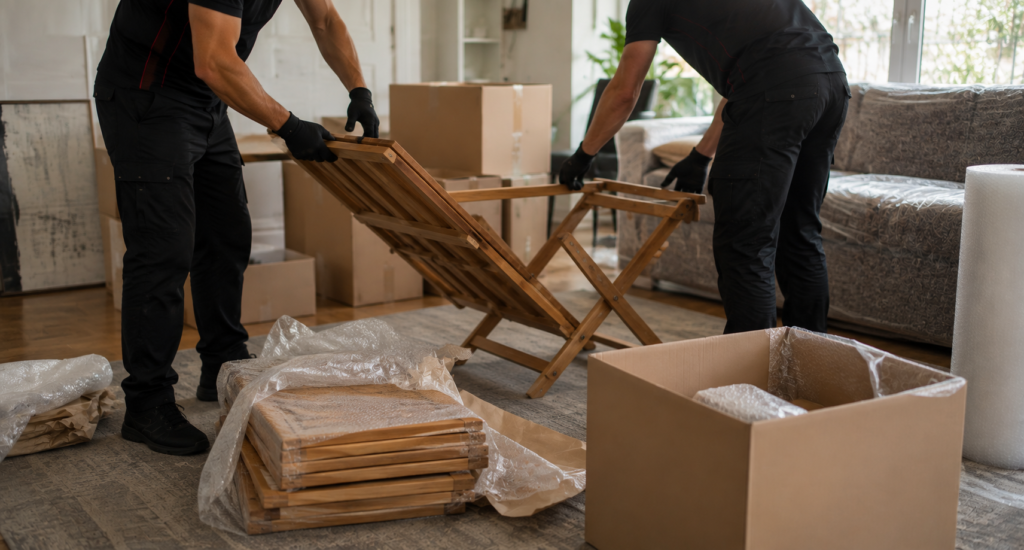
Dining tables, bed frames, desks, and shelving units are often safer to move after disassembly. Smaller pieces are easier to carry through doors and are less likely to hit walls.
Keep screws and bolts together in a labelled bag and tape it safely to the furniture.
5. Skipping Corner Protection
Corners are usually the first part of furniture to get damaged.
Glass tables, marble tops, mirrors, and timber cabinets all benefit from corner protectors or thick padding.
One small bump against a doorway can leave a permanent mark.
6. Using Thin Blankets
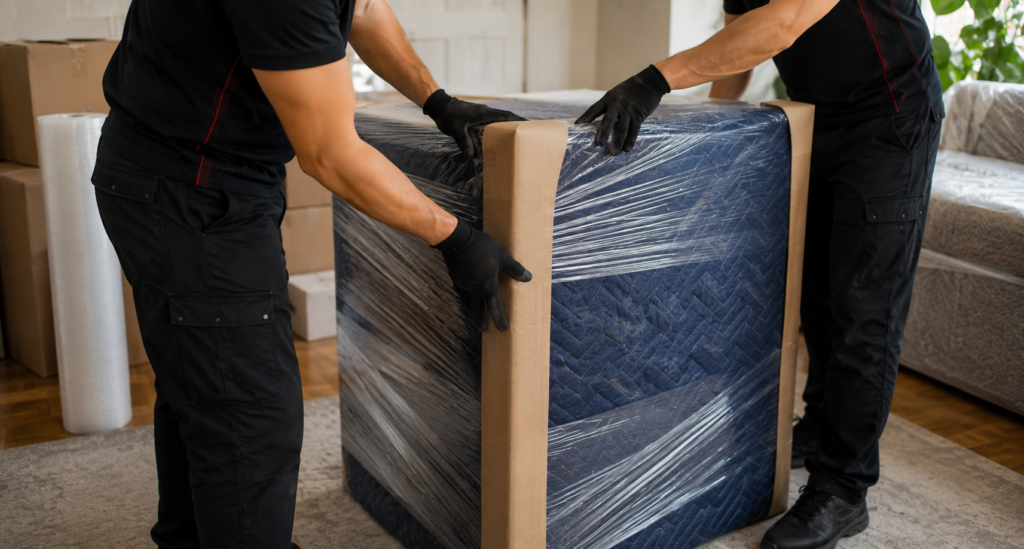
Regular household blankets provide some protection, but they are not designed for moving heavy furniture.
Professional moving blankets are thicker and help absorb impacts during loading and transport.
If you are packing furniture yourself, use the thickest protective materials available.
7. Wrapping Furniture While It Is Damp
This mistake happens more often than people realise.
After cleaning furniture, some people immediately wrap it in plastic or moving blankets.
Wood and fabric should always be completely dry before wrapping. Trapped moisture may lead to mould, unpleasant smells, or damage during storage or transport.
8. Forgetting About Glass Doors
Display cabinets and entertainment units often have glass doors.
If possible, remove the glass panels and wrap them separately. If they cannot be removed, protect them with padding and secure them so they cannot swing open during the move.
9. Packing Hardware Loose
Bed bolts, shelf pins, and table screws are surprisingly easy to lose.
During one move, a customer spent nearly an hour searching for missing bed screws. They had accidentally packed them in a kitchen box.
A simple labelled bag can prevent this problem.
10. Overloading Small Furniture
People often place boxes on top of lightweight chairs, bedside tables, or coffee tables while waiting for the truck.
Furniture is not meant to be used as temporary storage. Too much weight can weaken joints or scratch the surface.

11. Leaving Doors and Drawers Unsecured
Cabinet doors and drawers can swing open while furniture is being carried.
This creates a safety risk and increases the chance of damage.
Secure them gently with moving wrap or soft straps before lifting.
12. Forgetting to Measure Large Furniture
One family packed their large sofa perfectly, only to realise it would not fit through the front door.
The entire moving team had to stop while the sofa was partially dismantled.
Measuring furniture and doorways before moving day saves valuable time and avoids unnecessary stress.
13. Using the Wrong Box for Heavy Items
Heavy items such as books should always be packed in smaller boxes.
Large boxes filled with heavy belongings become difficult to lift and may break during transport.
Smaller boxes are easier to carry and help protect the contents.
14. Leaving Empty Spaces Inside Boxes
Boxes that are only half full allow items to move around while the truck is travelling.
Even careful drivers must slow down, turn corners, and drive over uneven roads.
Fill empty spaces with packing paper, towels, or other soft materials so the contents stay secure.
This is one reason why packers in Sydney spend time checking every box before sealing it.
15. Thinking Plastic Wrap Protects Everything
Plastic stretch wrap is useful for holding drawers closed and keeping dust away.
However, it should not be the only protection. Furniture still needs padding underneath to absorb bumps and prevent scratches during loading. Experienced Sydney packers usually combine moving blankets with stretch wrap to provide better protection.
Why Professional Packers Notice These Small Details
During that Sydney move, the family was surprised that our team spent almost thirty minutes making small changes before loading the truck.
We added extra padding to a dining table, removed loose shelves from a bookcase, emptied heavy drawers, and repacked one fragile box that had too much empty space. None of these jobs took long on their own, but together they helped prevent damage throughout the journey.
That is the difference experience makes. Professional movers know that small details often have the biggest impact. Whether you are using a packing service in Sydney or packing your home yourself, taking a little extra time can protect your furniture and make moving day much easier.
Conclusion
Furniture is often one of the most valuable parts of a home, both financially and emotionally. A favourite dining table, a family bookcase, or an old armchair can hold years of memories.
Most furniture damage is preventable with careful planning and the right packing methods. Removing loose parts, protecting corners, filling empty spaces, and using proper wrapping materials all help keep your belongings safe during transport.
Experienced packers in Sydney understand that successful packing is about much more than filling boxes. It is about protecting every item before it even reaches the moving truck. With good preparation and attention to detail, your furniture has the best chance of arriving at your new home in the same condition it left.
Recent Posts
- Moving House on Settlement Day in Sydney: What Should You Plan For?
- Why Are Removalist Quotes in Sydney So Different?
- 15 Packing Mistakes That Damage Furniture During a Move
- How Much Does It Cost to Hire Removalists in Sydney? A Simple Guide to Understanding Moving Costs
- 12 Signs a Move Is Going to Be Easy Before We Lift the First Box